
BY KAILYN SLATER
I am an electrical interface for plastic. The epistemology of that interface is heat (pressed or emanated as sweat), my hands, more plastic, bright capture by scanner, camera, or microphone, and the liminal conduction of electricity absorbing through shapes (3D print filament, the curve of an audio frequency, or rotating discs).
I work with information, both as a library worker and as a DJ. During the day I help patrons with 3D printing, laser cutting, and access to creative software tools. Occasionally, late into the night, I plug a USB into a digital turntable and booming sound system. Each day, I shape electricity, and morph plastic.
The commercialization of 3D printers, and maker culture, enabled public libraries like the one that employs me to construct what we call makerspaces. Much of the research on makerspaces in library settings are focused on academic contexts, and these particular spaces tend to be aligned with engineering, industrial design, and other STEM departments. There’s a lot of focus on building skill and job training—but not a lot of focus on being. Through grant-funded equipment, and the property taxes of the affluent community I work in, I am able to have a job helping people learn how to use a drum machine and MIDI controller just to… make music. Collective flourishing through collective electrical power.
Before I became a library worker, I was an art student and baby DJ, desperate for studio spaces for creating new media outside of a computer lab. So, I turned to my institution’s radio station, and faked my way through a student job, learning how to set up turntables for on-campus events. Playing parties in Chicago’s queer and DIY nightlife scene, I became acquainted with every way to play—CDJs with broken knobs sticky with booze, compact controllers brought in a duffel bag, and vinyl turntables aptly named Technics. Each setup provides their own affordances: a controller meant you needed to bring your own laptop to the gig; others just a USB, or a bag of records, or both.
All turntables operate through the conduction of electricity, either through microchips or grounding by metal and wire. But the advent of software-forward turntables has sparked, literally, a now decades-long debate between DJs about what form our mixing should take: is vinyl the only true way to jockey discs? Should the sync button—an automated function in CDJs and digital controllers that aligns waveforms based on their key and how they’re quantized—be abolished? But, is the alternative—exclusively DJing with vinyl—promoting a culture of overconsumption?Is the environmental cost of touring as a DJ prohibitively high? Why does the industry rely so much on products produced by AlphaTheta (formerly known as Pioneer), especially after firmware for their new CDJ3000s inadvertently wiped access to digital files from USBs that aren’t compatible with the latest upgrade?
DJing exists within, and perpetuates, a culture of excess. This dynamic has historically been one rooted in protest and revolutionary intentions: house music developed in New York and Chicago by Black, queer and working class people seeking an alternative space to unwind and feel joy without fear of surveillance from their white, straight, yuppie counterparts. Producing dance music happened in basements, with drum machines bought by Black youth in Detroit seeking escape from industrial decay and economic disparity. Now, digital audio workspaces (DAWs) like Ableton Live and Pro Tools digitally emulate the machines and synthesizers that were previously only accessible in physical space. Of course, an increased availability of resources means that more people are making music—including me, as well as the patrons that I serve—but it also means a higher likelihood of a disconnection between the history of dance and electronic music and the technology that facilitates the production of its culture.
The commodification of dance music, and the social-media-ification of electronic-focused nightclubs and raves, has certainly produced a sense of bloat. The COVID-19 pandemic and fractures in labor organization in nightlife closed clubs—some temporarily, some permanently, like Berlin Nightclub in Chicago—and shifted audiences to livestreams. While there were, of course, many eyes on screens and ample time for dancing in your bedroom, DJs faced issues retaining audiences and receiving regular monetization because of copyright infringement and extremely low to no pay from streaming services. Audiences new to dance music, who had not experienced a pre-COVID world where you could only find out about a party at a warehouse through word-of-mouth and flyers passed out at DIY venues, began throwing their idea of ‘raves’ and advertising on social media platforms to attract influencers and sell tickets. I’ll let you read this article about white promoters making “major waves” in Chicago’s River North neighborhood, from a media agency that “offer[s] leading brands access to the most affluent audiences in the most prominent cities across the United States.”
Now, I am a white DJ, who could suddenly and neoliberally choose to assimilate within this growing norm of corporate, yuppie influencers if I decided that DJing was my career. But that’s not the scene that I grew up in—not even close. The market for DJs has limited dramatically across the United States since the pandemic began, and nightclubs are slowly recovering from loss of revenue. But the mainstream popularity of dance music means more expensive talent, higher ticket prices, and a growth in music that sounds, truthfully, mediocre. Excess, but in a way that feels wasteful.
The active choice I did make was deciding to become a librarian. Facilitating access to community-funded resources, ensuring those who enter the space become equipped with the knowledge to help them succeed in whatever they want to accomplish, connecting with people of all walks of life—this is much more important to me than relying on alcohol sponsorships and ticket sales for my income.
The most popular service the makerspace in my library provides is 3D printing. I’m in an area where many have seen a 3D printer before, and may even have one in their home. They have opinions about filament. They’re also, rightly, concerned about the wasted filament produced from models that fail during printing, or the folks that don’t come pick up their requested objects. They want to make sure we’re recycling. The type of filament we use, PLA, is derived from cornstarch and will eventually decompose—once high heat and a chemical agent are added. We have few choices but to work with it, remold it into something else. One of the more difficult parts of operating our space is that it inherently produces excess: very little, if any of the material we interface with and make objects out of, can be recycled through traditional—paper-based—means. However! We’ve found beautiful, charming, chemically-changing ways to make use of as much excess as we can.
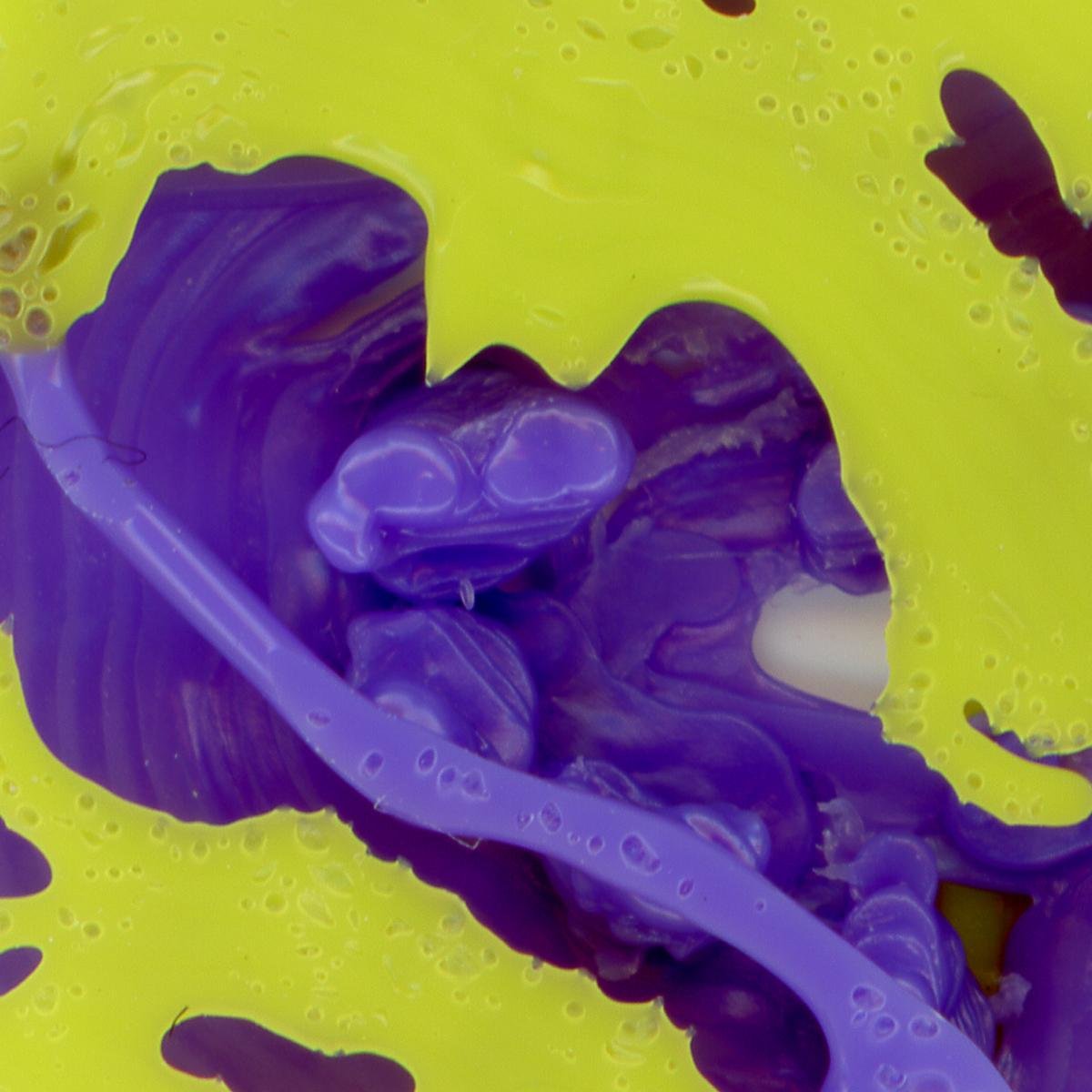
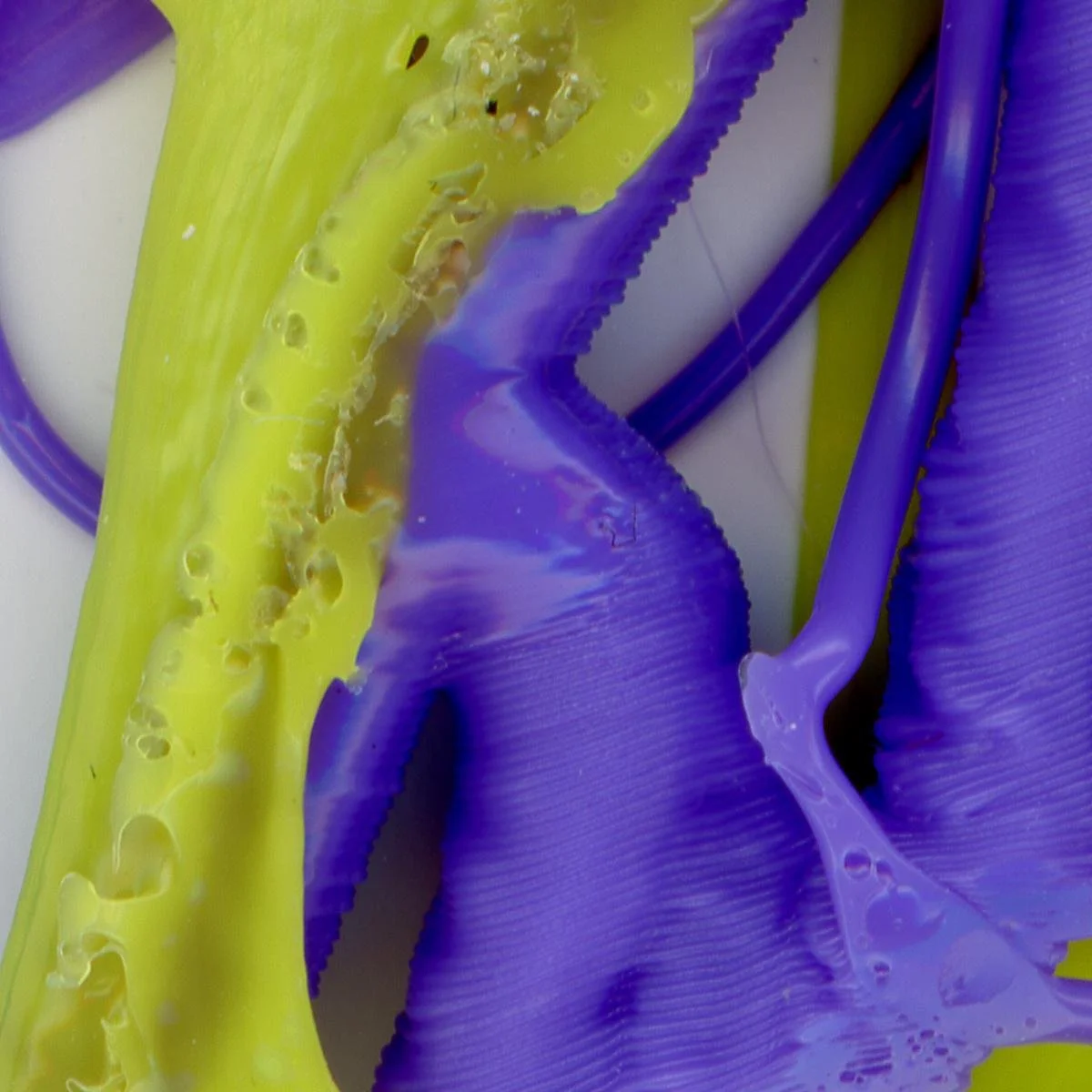
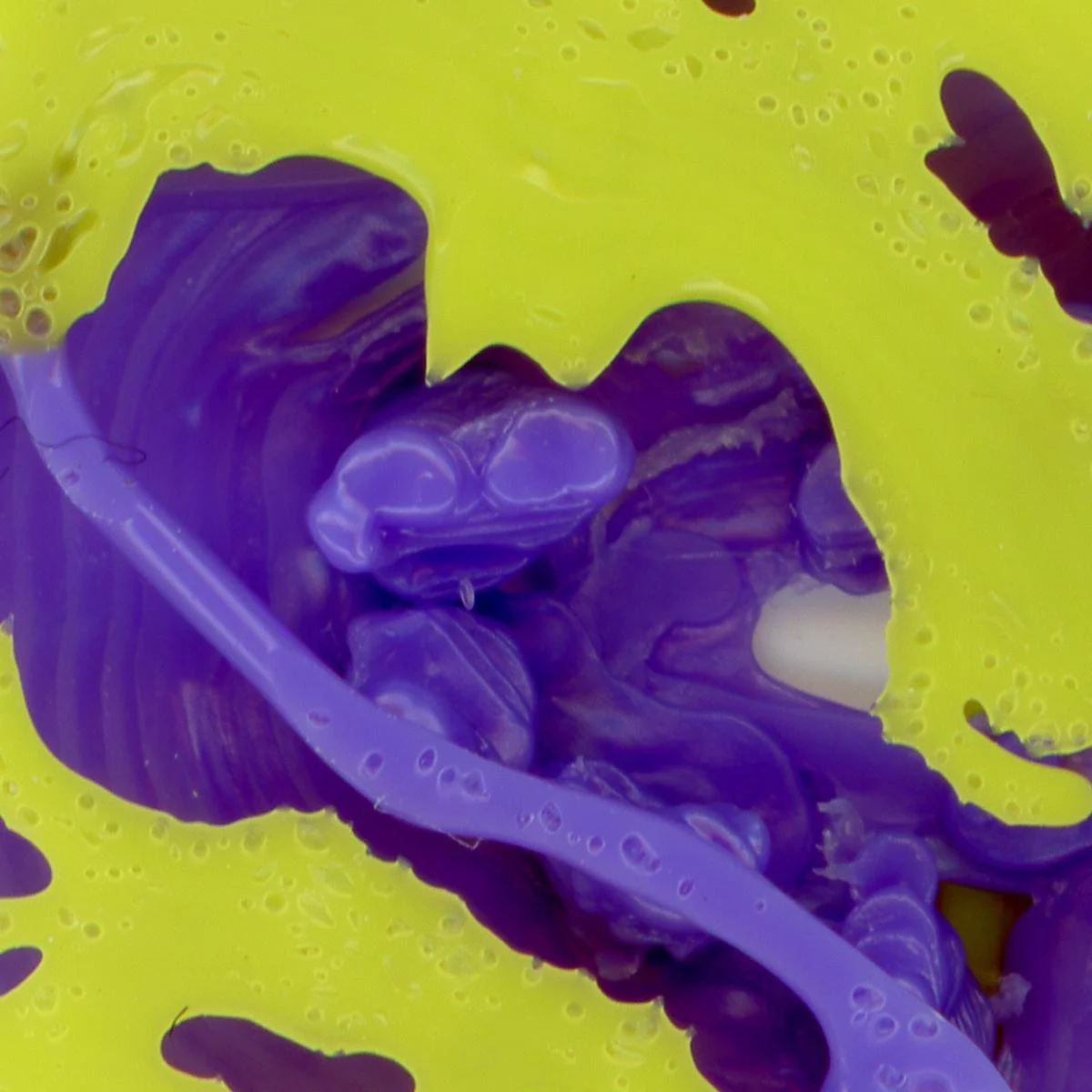
We will take excess bits of 3D print filament, place them within a lamination pouch, and apply a good amount of heat and pressure. Depending on the contours and depth of the filament, bits melt together in an asynchronous harmony. It’s not quite until we get to zoom in at FADGI-compliant resolution—my own personal choice, I want to see the dust—that the textural ambiguity and cavities formed become apparent.
I didn’t expect to get the sense that these types of scans would so accurately represent the blending together of two tracks from differing genres. But when they go together, it all feels smooth, like they were never meant to be apart. Producing compositions with excess, cycling these materials through my own hands, has connected my past, present, and future together.
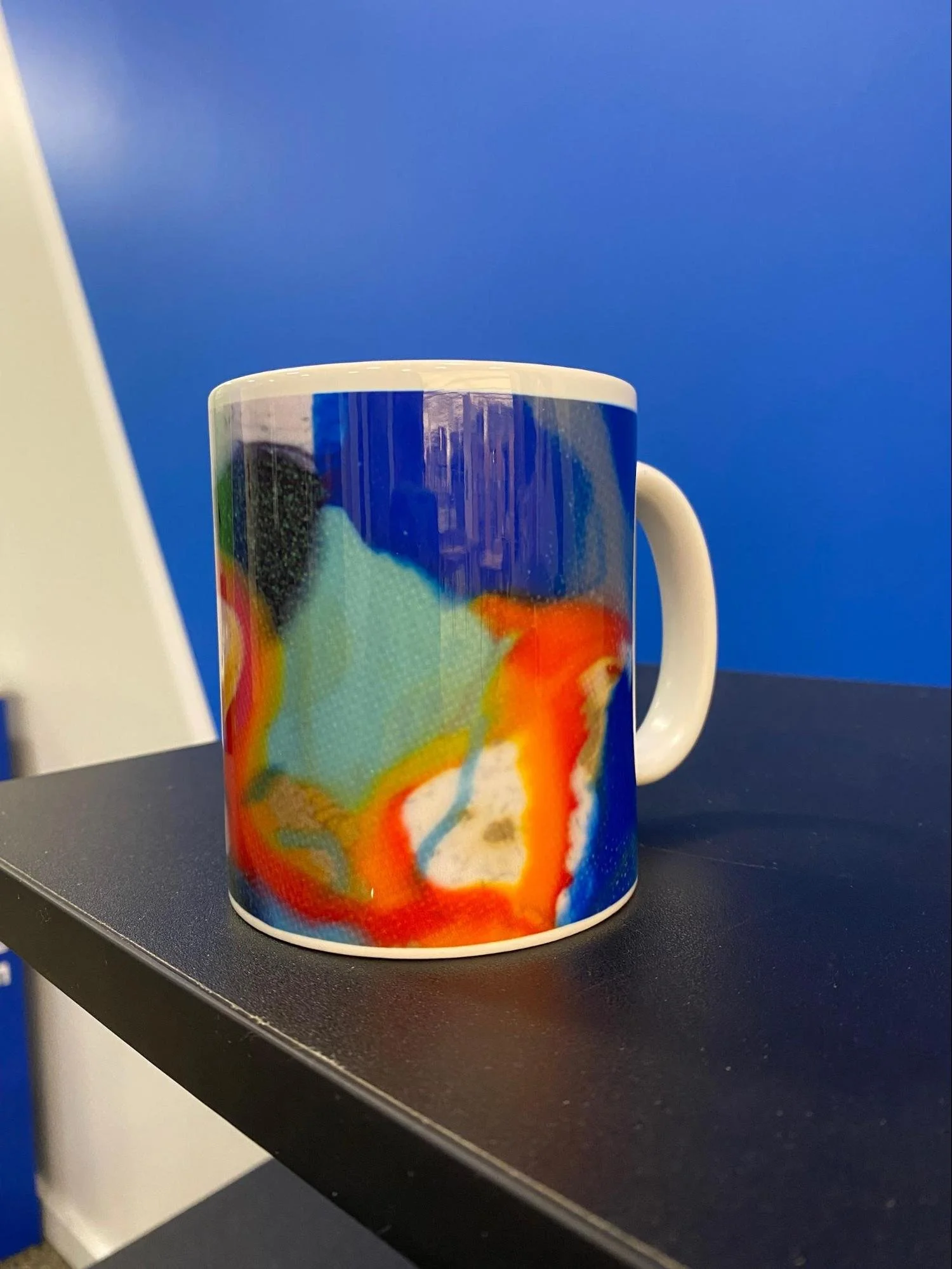
Increasing the integration of heat, plastic, and color, I print these scans onto sublimation paper, and press them onto a ceramic mug. I gave one to my mom last year, the only way I knew how to communicate what I do, how I have put the degree she helped me spend thousands of dollars on to practice.
How can we make upcycling plastic easier? How can we continue to decrease barriers to this type of interdisciplinary creation? Even though the journey from heat press to scanner, or laptop to flash drive, feels small, the ability to represent artificially blended excess, produced through technology, is an endeavor that must exist beyond my own experiences from loud, dark rooms to fluorescent-lit lab. All I know is that I can’t seem to get away from plastic.
Kailyn “Kay” Slater is a Chicago-based public library worker and critical information studies scholar. Slater was the winner of the 2025 Annual Library Juice Paper Contest for their work “Against AI: Critical Refusal in the Library.” They hold a MSLIS from the University of Illinois Urbana-Champaign and a MA in Communication from the University of Illinois Chicago.